


Design Characters for Gameplay Without Endless Iterations (Free eBook)
In previous blog posts, I shared 7 Character Design Tips, which was featured on Artstation’s newsletter back in 2022. This was a surprise to me at the time, because I wanted to give back to the community, to write my thoughts about how I approach character design, and it was also my very first “real” blog post, so it was a pleasant surprise to see it featured by Artstation.
Character design has been the most requested offer by clients and even students seeking mentorships, because of that I decided to create a new ebook, for free, with more tips, but with a focus on how to design game character classes for video games.
The following PDF contains everyday knowledge I use when creating characters for games without endless iterations. Now it won’t give you everything that I know about character design, (it’s impossible to pack it all under a 20 page ebook, really) but I’m confident it’ll serve as a valuable thank you gift and teach you how to iterate less, and to appreciate your continuous support to my work.
Thank you for following me, and let’s get started!
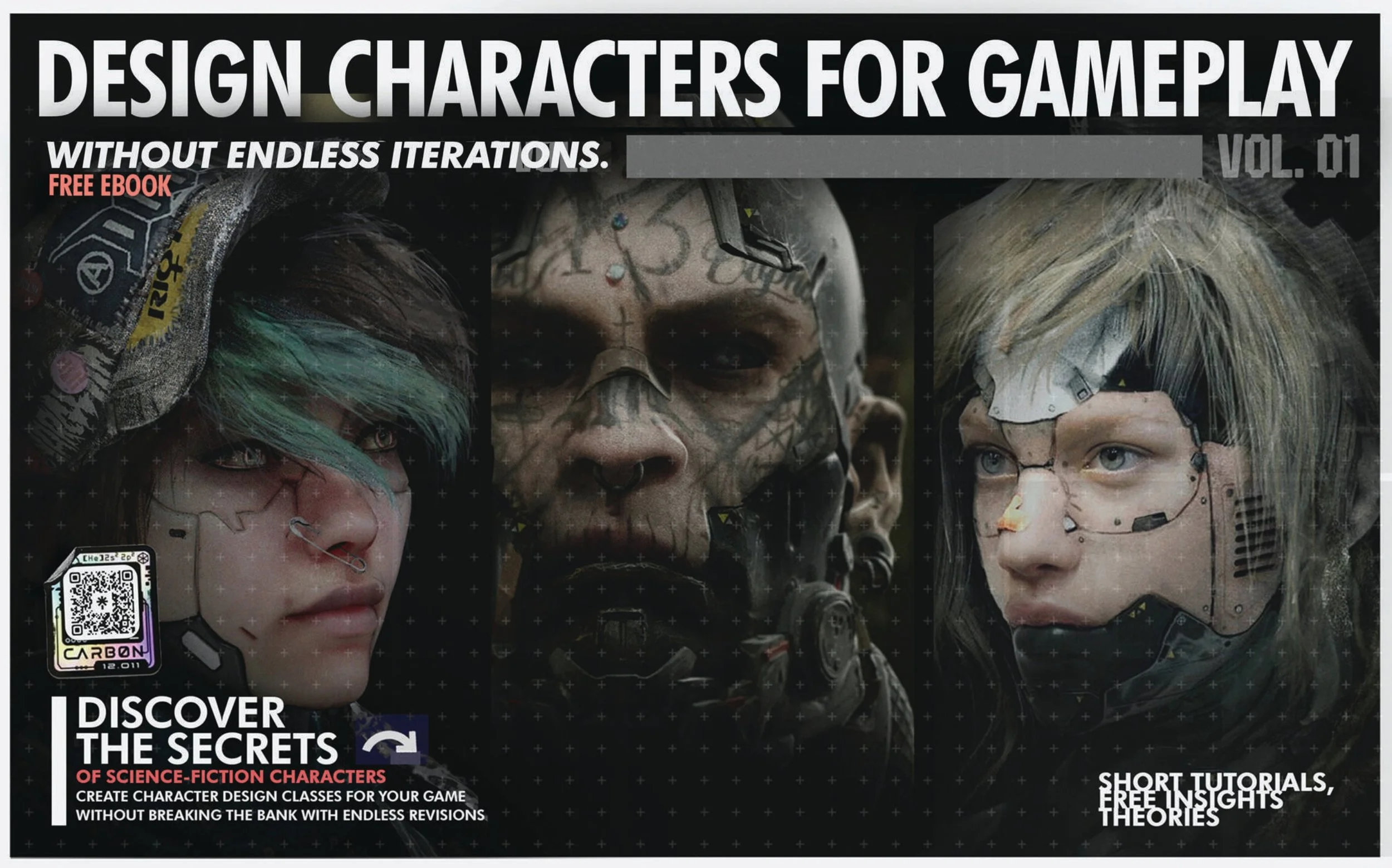
If your character designs look great but lack gameplay, please download this.
How to add Character to Character Design?
This is one of the pages included in the free guide. You can see I went into different details about the character and how we can ensure it is perceived as a Tank by players, while still making something that is appealing and within our own style. It’s important, as David Bowie put it “Don’t work for the gallery”; work for you instead. Because we’re doing commercial art, it needs to be liked so it can be sold, but that doesn’t mean to rid your work of authenticity, which is what attracts your most loyal fans. Iterations here work deliberately.
For years, we had built on the premise that marketing and data decide what sells, but the audiences have spoken about what they’re craving. Personal stories without data and algorithms are what sells.
As more and more content looks the same due the democratization of AI art, the most unique voices have imperfections, these will stand out the most. This is normal, because we can only tell things apart if they are in contrast.
Not only does this allow people to connect to the real author and their tastes and interests, attracting a cult-like following, but enables online community around the game project, which is essential for returning customers and game sales.
There’s no amount of UX research or online surveys that can replace this type of interaction with your playerbase.
Bonus Tips On Designing Tank Characters
If you’ve downloaded the guide, then you’re in for a treat. I’m going to drop more knowledge about Tanks, just for you, because you’re the special kind of follower, who reads the blog, the ebook, and the Instagram captions - heck, I know you even read my hashtags. You don’t need endless iterations for this, you just need to iterate the very thing that represents the character.
The tank class is for the most part the one that can take a beating, you see spinoffs of this in RPG games as well, such as the bar bouncer or the tavern keeper who happens to be a big guy. In some cases, they carry heavy machineguns, or in medieval games, heavy battle-axes… they symbolize strength and safety. They can be portrayed as a Berserker Viking Warrior ready to raid, or as a Gentle Giant who won’t harm a fly, unless you harm their friends. Whatever spin you want to put on it, there needs to be something at its core: Strength.
It can be portrayed in any way you want it to, as long as it is recognized as such.
But let's focus strictly on FPS games.
The important point is that you communicate this character can handle chaotic situations well… they look like they can take care of themselves and soak up damage while the rest of the team plans a tactical assault, such as flanking.
In this cyberpunk character design of a Tank, which I named 'Tank Boy' as an homage to Jamie Hewlett's 'Tank Girl' (Hewlett also created Gorillaz, and his work has been a major influence on me when growing up in the 90’s), I added sturdy plates to the chest under the vest, ensured the arms looked muscular, and included a very subtle reference to a rhino in the neck armor. If you look close enough, you may see the ears and mouth of a rhino abstracted into the design.
Just because one wants to be original, it doesn't mean you don't have influences.
Yes, it's subtle! But it made all the difference.
The changes to the bone structure of our Tank by referencing Brock Lesnar were also subtle. Rome wasn't built in a day, and neither is great character design. The best designs layer small ideas that build up to the bigger picture you want to convey.
Tips on Creating an Assassin Character
The intent is to create a memorable entry point into your game; this is what everyone tries to do with their marketing campaigns, ads, and press coverage. To get people to look at their game, they invest in graphics, flash, and colors, but the thing that really works is creating an entry point for people to walk into your digital world.
The games industry has changed. Traditional advertising may have established channels for reaching audiences, but the actual way to make people connect is to show them an online community they can belong to.
This character also mirrors this philosophy. It has some edge that the previous Tank didn't quite have. Adding skull motifs to a character is an easy way to achieve this, but we're not just adding a skull; we're merging cultures. Samurai and traditional Japanese mythology with modern military tech: Can you think of a better combo for appealing to players? It's designed to get people to the character screen right away and make them select this one first.
Bonus Tips on Creating a Medic Character Design
The medic has fascinated me for a while as a class design; an altruistic support role that sits back and ensures everyone has what they need to keep fighting. The trend has been that this character is often chosen by players who can't aim, so I made sure to give these players enough firepower to want to engage in battle themselves.
The four arms are simple at their core function: two arms focus on throwing medkits around, and the other two keep the gun stable enough to point and shoot.
This makes the character feel modern in a way that most games don't touch, because the goal here wasn't optimization, but clarity. The Soldier-meets-Medic archetype isn't just for show; I think it works because it taps into something we're all craving as human beings: someone on your team who can have your back, but also stand by your side when it matters.
Just because we're designing robots, it doesn't mean they have to be cold and coded; they can be natural and fulfill the emotional needs that players have, both online and IRL.
You may find this page, along with the rest of the chapter in the free guide.
The Spellcaster
With the spellcaster, I have to say I tried to transform the way we perceive characters in games.
Welcome to the convergence of storytelling, entertainment, and most of all, philosophy. Our caster relies heavily on embodying archetypes such as an oracle or prophet, so the black colors would give her a mysterious look. For this, the Wicca subculture was the best fit.
Philosophy as Entertainment Design
This goes far beyond aesthetics and just looking good. The goal here with this hybrid of streetwear and goth was to elevate both the class design of the character (someone who casts spells) and the modern version of a street witch. They go hand in hand in supporting each other as storytelling elements that enhance her role in gameplay.
What this does is essentially open the door to show more of the character; more of her stats, more of who she is; but also invite you to ask about her.
Even though the character is fleshed out in all these ways, we still don't know the answers to the questions we can pose about her, and the fact we don't know is the hook:
Is there a space in the future for religion and cyber-augmentation to co-exist?
Will someone who is half-robot still believe in spirituality?
Will graffiti, denim, and other cultural motifs still be around hundreds of years from now?
We move from character design for video games to having a moving, living piece of philosophy participate in them.
It’s less about how many drawings you can create in a endless drawing spree and more about mindful iterations.
About the author:
Miguel Nogueira is a renowned freelance concept artist, designer, and storytelling strategist.
Miguel has supported AAA and AA game studios as a Senior Consultant Concept Artist on titles as Arc Raiders, Battlefield, Tom Clancy’s Division 2, to name a few.
If you liked this post, you can download the full free guide, or share it with someone who might find it helpful.
Do you feel overwhelmed with character design in your project?
If you have any questions or comments, or need help with character design, reach out via email.