


Creating a Strong Painting
Does your art feel too detailed? Do you not know when to stop and when to add more?
Creating a strong painting is a lot like math; you have to use logical decisions to be able to present your work.
You can do this with shapes, patterns, colors, and anything is possible, and here are a few examples to get started on refining your concept art and making sure it has the right impact.
To get your art to read better, the most efficient thing you can do is to apply brush economy. This is the foundation for a strong painting.
What is brush economy? A theory and a term that dictates how much detail should be in a painting to make it the most efficient, but also the most readable to look at.
My last client came to me because their team of illustrators couldn't figure out a specific art style. What I found was that they were detailing things too much. Crazy right? It is a real thing: if everything is interesting, then nothing is; if you detail everything too much, then nothing will stand out. Can you imagine a movie where all the characters are main characters? Confusing, right? A painting reads the same way: you cannot have the background compete with the main subject for attention.
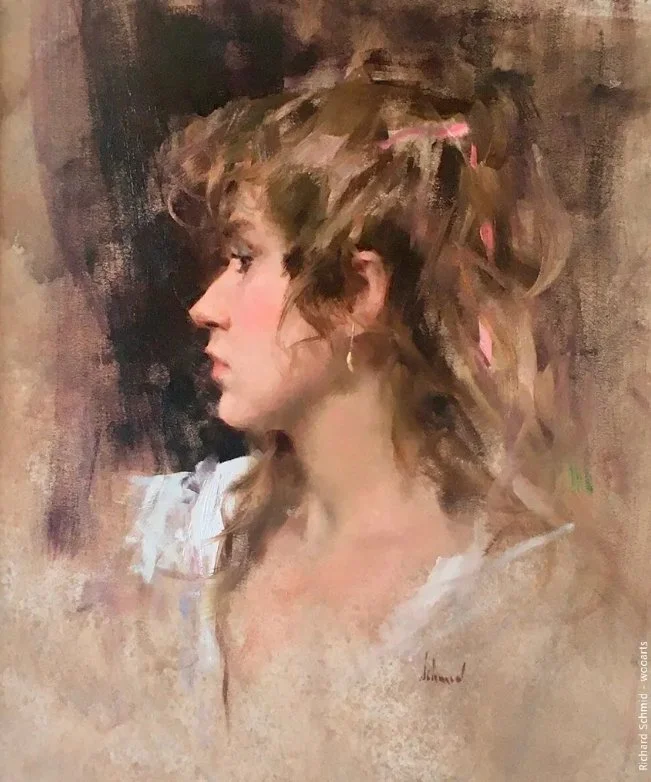
Let's look at this beautiful painting by Richard Schmidt.
The most detailed features of the painting are the face features, nose, eyes, and ear, and it reads well; it's also where the human eye will look at first when trying to read the painting. We are drawn to both faces (it's how we communicate with other people) and to detail. This painting has both, but the background? It's all a blur, the hair, a soft feature of this portrait, blurs into the background; it's both a soft material, in comparison with the face, and it reads just fine as it is by suggesting it with broad strokes.
If the hair were the same level of detail as the face, it wouldn't read as well.
The same happens here with this masterful environment painting of a snowy house. As long as you can read what the composition is, it doesn't matter how much detail it has.

Pro tip: If you can narrow your eyes at the image, and it still reads realistically, then you have a strong painting.
Certain styles or genres of art place a greater emphasis on brush economy than others. For instance, in hyperrealism, where the goal is to render every detail, it's still common to see areas with less detail or some blur. This reflects how photographs often display variations in focus, ultimately improving the overall composition. As humans, we cannot concentrate on everything at once, so prioritizing composition is crucial. A good rule of thumb is that the background and less important elements should be painted with minimal detail, while the main subjects should contain the most intricate details.
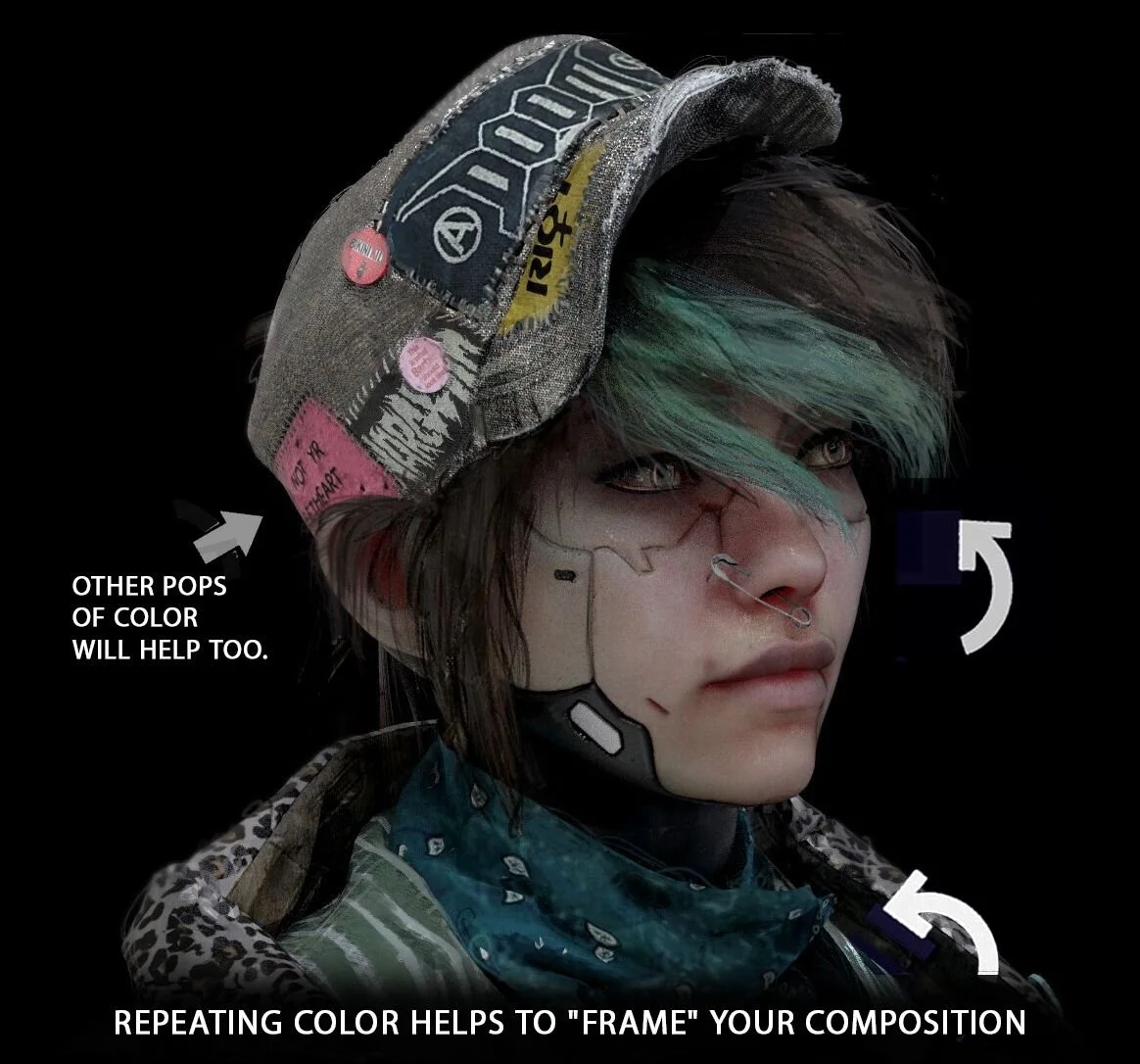
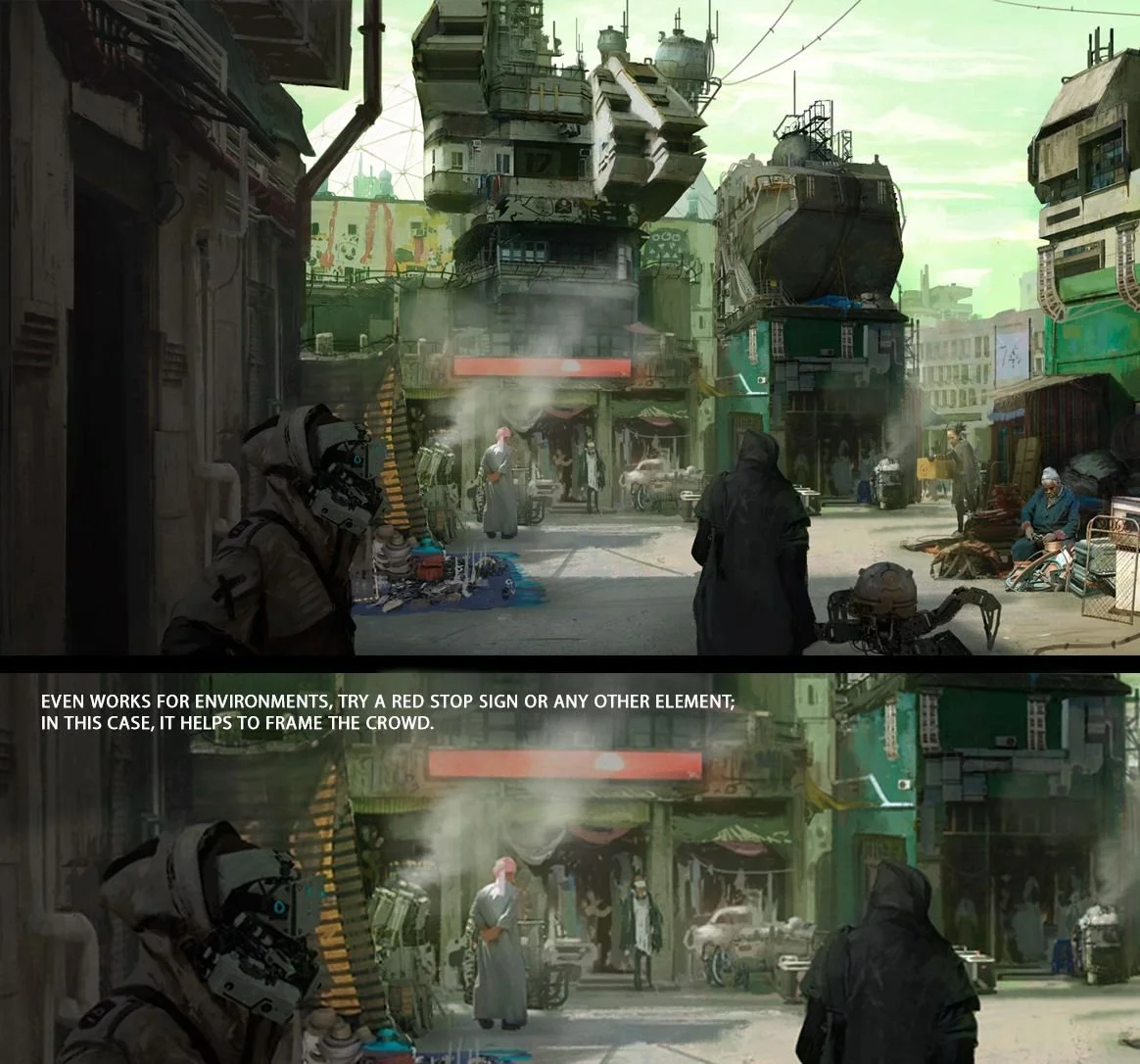
Here is how I applied these fundamentals in my own concept art:

About the Author: Miguel Nogueira is a Freelance Concept Artist working in Games, Film and Entertainment. He has worked for such studios as Sony Playstation, Electronic Arts, Blur and a few others.
Follow the author’s work and full portfolio.